





Droopy upper eyelids and baggy, puffy lower lids are usually both caused by skin losing elasticity during the aging process. In the case of the upper eyelid, this creates an extra fold of skin which falls lower and nearer to the eyes over the years. This problem can also be caused by the fat inside the skull that acts as a cushion for our eyeball. Over time, the thin membrane that holds the fat into place can weaken, allowing the fat to protrude into the lids.
Eyelid surgery corrects these problems by removing excess, loose skin from the eyelids. Eyelid surgery can be performed on upper eyelids, lower eyelids or both. To discuss your expectations and goals with regard to eyelid surgery, contact our eye specialists at Metrolina Eye Associates.
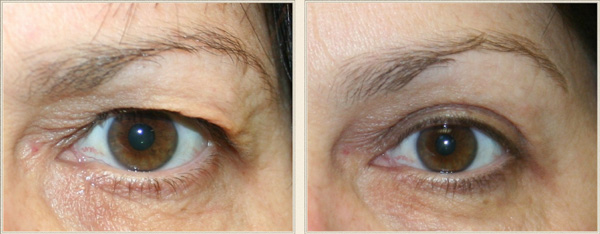
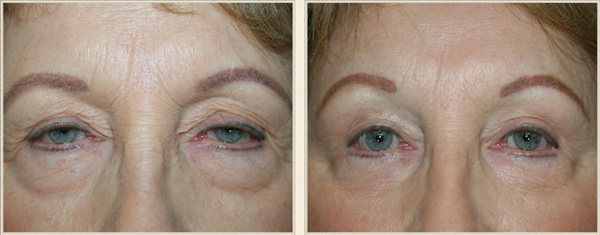
Good Candidates For Eyelid Surgery
A good candidate for eyelid surgery should be in overall good health and free of serious eye conditions. Good candidates include people with the following conditions:
- Loose skin hanging over eyes from upper lids
- Puffy upper eyelids
- Bags or puffiness under the eyes
- Creases or folds under the eyes
Tips For Choosing Your Eyelid Surgeon
Oculoplastic surgery (also known as ophthalmic plastic surgery or oculofacial surgery) is a specialized field of medicine that combines the highly-detailed microsurgery of ophthalmology with the cosmetic principles and art of plastic surgery to achieve the best results for patients looking to or needing surgery around the eyes.
Oculoplastic surgeons, such as Dr. Christine Annunziata with Metrolina Eye Associates, typically undertake 6-7 years of surgical training after medical school to become specialists in eyelid surgery. Those, like Dr. Annunziata, who go on to the 7th year, generally have additional advanced training in cosmetic procedures of the face, including upper and lower face-lifting, fat transfer, and non-surgical procedures such as skin care, laser treatments, and injectables. An oculoplastic surgeon typically completes thousands of eyelid surgeries just in their training years alone, and since their practice typically concentrates only on the eyelids and face, they perform thousands more each year that they are in practice.
General plastic surgeons also undergo specialized training, and many of them perform eyelid surgery. However, most general plastic surgeons concentrate all over the body and perform other procedures such as breast augmentation or body lifts. Facial or eyelid procedures may not be a particular concentration of a general plastic surgeon, and they may not perform as many of these procedures in a year as a consequence.
Choosing Your Eyelid Surgeon
There are several factors to consider when choosing the best surgeon for your eyelid surgery:
Trust
Most importantly, you should choose a surgeon that you trust, who listens to your concerns, and you feel comfortable will be there for you if you experience difficulty before, during, and after the procedure. The doctor-patient relationship is extremely important and can significantly affect the outcome or your surgery. Word of mouth is often the best source to help you gain confidence. Ask to speak with patients who have been through the process with your surgeon – this is usually more valuable than seeing a case of before and after photos that are specifically chosen. You are better off hearing it from an impartial third party.
Certification
Choose a surgeon who is board certified. Board certification is a rigorous process that ensures that your surgeon is skilled and experienced in the latest advances in the field. The training to become an oculoplastic surgeon is demanding and extensive. The path to becoming a certified oculoplastic surgeon is actually one of the longest and most challenging of any specialty in medicine, as it requires both certification by the Board of Ophthalmology and a separate certification by the American Society of Oculoplastic and Reconstructive Surgery. Nationwide, there are only 15 surgeons per year selected to train as an oculoplastic surgeon, so as you can imagine, only the best physicians are even permitted to enter the field.
Experience
Choose a surgeon who has experience in both cosmetic and reconstructive surgery. While many patients present solely for cosmetic reasons, it is important to make sure that your surgeon also has extensive experience in reconstructive surgery. It is true that most aesthetic procedures go as planned and patients experience an excellent result as they heal, but sometimes revisions are necessary and this is where a reconstructive background is key. In fact, the best oculoplastic surgeons serve as resources in the community for reconstruction following unexpected surgical results.
Safety
Choose a surgeon who can examine the eyes before and after surgery – Eyelid surgery is more than just trimming extra skin and fatty tissue to rejuvenate the area. Complications can and do occur and are more likely to occur if you have a pre-existing condition. Some patients are simply not good candidates for eyelid surgery, or have co-existing conditions that make them higher risk patients. Although rare, severe and vision threatening complications can occur with eyelid surgery and only an oculoplastic surgeon with a background in general ophthalmology can diagnose the problem and either prevent or treat the problem as you recover.
Full Package
Choose an eyelid surgeon who has more to offer than just surgery. You may be a better candidate for non-surgical procedures or you may want to return for further treatments with Botox and dermal fillers like Juvederm, Radiesse, etc. to continue the maintenance treatments necessary to achieve the results you desire. Your surgeon should be looking at your eyes and face with a broad set of skills from which to draw in order to help you achieve your goals. Each patient is an individual, so there should not be a one-size-fits-all approach.
Dr. Christine Annunziata specializes in facial reconstructive and cosmetic surgery as well as non-surgical procedures including laser skin treatments and injectables for wrinkle and fat reduction. She is board certified by the AAO and ASOPRS. Dr. Annunziata has been practicing medicine since 2002 and exclusively plastics since 2006. She performed thousands of cosmetic and reconstructive eyelid and facial surgeries. To learn more about your options and all of the services Dr. Annunziata provides, call our office at (704-234-1930) to schedule a consultation.
The Eyelid Surgery Procedure
Eyelid surgery is an outpatient procedure and typically takes one to two hours to perform. You can go home immediately following the surgery, but you should have someone drive you home and stay with you for the first night.
The eyelid surgery procedure is performed under local anesthesia (a painkiller that is injected in the area around the eye) along with oral sedatives. For upper eyelids, an incision is made in the natural crease, or fold, of the lid and excess fat is removed from the lid, along with loose muscle or skin. For lower eyelids, the incision is made either behind the lid for a non-visible scar or in a line between the lash line and smile crease under the lid. Excess fat and skin are removed from that area. Stitches are then used to close the incisions.
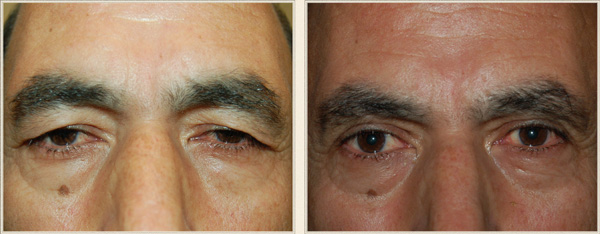
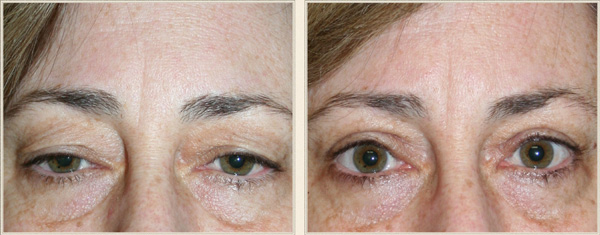
The Recovery Process
Some minor swelling and bruising may occur immediately following surgery, but this should subside within one to two weeks. Use an ice pack and keep your head elevated while sleeping to help with swelling. During this time, you should also use artificial tears and the antibiotic ointment prescribed by your doctor. Avoid strenuous activities, including exercise, for a few days after surgery. You will need to visit your doctor about seven to 10 days after surgery to get your stitches removed.
Schedule An Appointment
The doctors at Metrolina Eye Associates can diagnose and treat a wide variety of eyelid disorders, including a drooping lid on one or both sides (ptosis), lashes that are turned in or out (entropion and ectropion), problems with excess tearing, styes and any unwanted skin lesions. For more information on eyelid surgery, schedule an appointment with one of our highly qualified eye doctors. If you live in the Matthews, Stallings or South Charlotte area of North Carolina, call our local office at (704) 234-1930. If you’re in the Monroe area of North Carolina, call our local office at (704) 289-5455. Our Indian Land office in South Carolina is now open and we’re accepting new patients! Call (803) 547-EYES (3937).
